
Rules Requirements for ADUs in Los Angeles
If you live in Los Angeles and want to add an ADU, or Accessory Dwelling Unit, to your yard, there are some local rules and regulations you need to know about. Thankfully, California ADU laws have become more relaxed in order to promote the building of ADUs.
But first, here is a basic outline of an ADU: it’s a unit that is an accessory to a main home, and must have a full kitchen and bathroom to be considered an ADU.
People often refer to ADUs as granny flats or backyard cottages, but regardless of the name, an ADU is either attached to the main home or detached.
A junior ADU (JADU) is a unit that is no more than 500 square feet and contained within a single-family residence, like a converted attic, basement, or apartment above a garage, as examples. A JADU can include a separate bathroom, or it can share a bathroom with the main home.
Property Lines and Setback for ADUs
The first consideration when deciding on whether you can have an attached or detached ADU is setbacks and property lines.
With either kind of ADU, you must have a minimum 4 foot setback from the unit and your property line. Which means there must be 4 feet of space between the ADU and the property line.
This can be a major hurdle for detached ADUs.
The exception for setback rules is if you’re converting an old garage or another structure on the property into an ADU, even if you’re tearing down the unit and rebuilding your ADU in the same footprint as the previous structure.
ADU Size and Height Limits for California
This is another significant determination for attached and detached ADUs in Los Angeles.
If you go with an attached ADU, the maximum size allowed is 50% of the size of the main home. Meaning, if your home is 2,000 square feet, your attached ADU can be a maximum of 1,000 square feet.
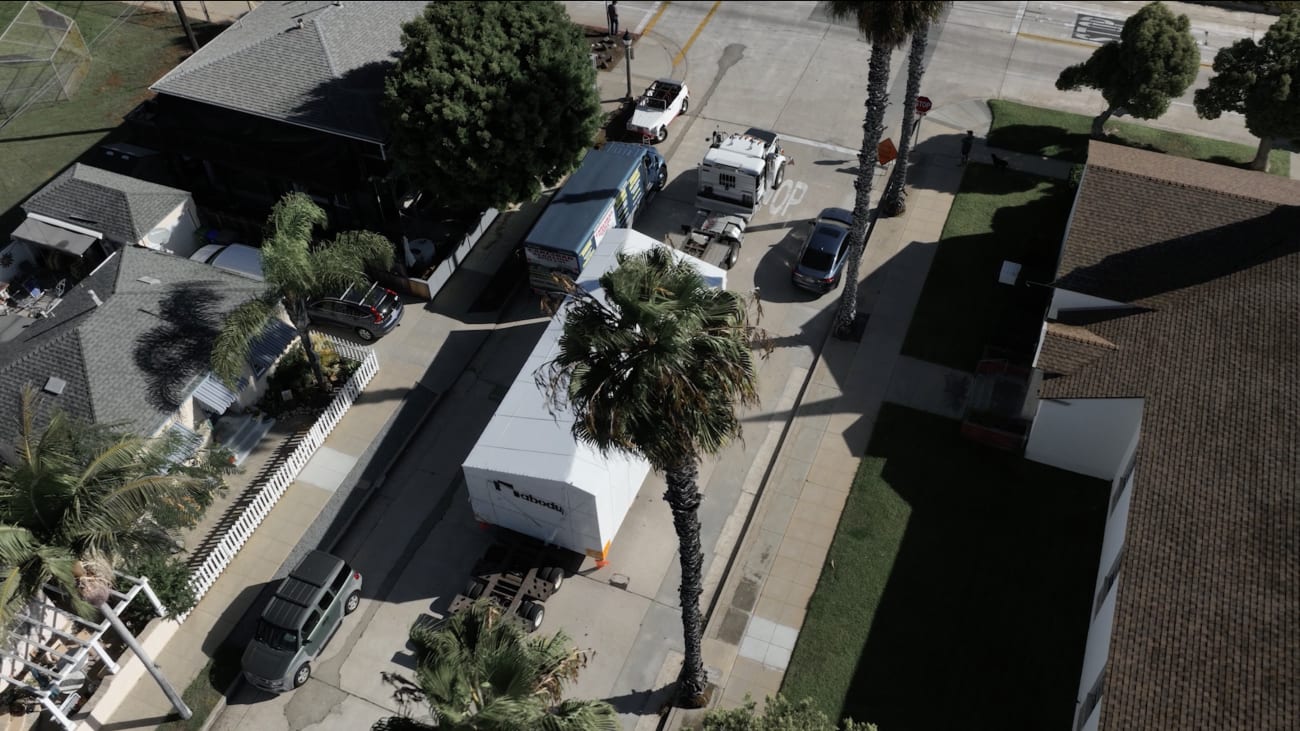
If you have the space for a detached ADU, which are the units that Abodu builds, then your ADU can be up to 1,200 square feet.
In general, your detached ADU can be a max height of 16 feet. However, there is some flexibility with new or partially new construction for up to 25 feet.
ADU Interior Space Requirements
The interior space size requirements for ADUs include at least 70 square feet for the living room and bedroom, 50 square feet for the kitchen (including closets and hallways), and the main bathroom must be at least 30 square feet and have a toilet, sink and shower stall or bathtub.
ADU Building Materials
With increased wildfire risk, there are many regulations related to what building materials are allowed for your ADU.
You have many great looking options for exterior finishes, but there are a few options you can’t use. Exterior finishes that are not allowed in California include: single piece composite siding, laminates, or interlocked metal sheathing. On your roof, you cannot use wooden shingles and you must have a minimum of a 2:12 pitch for more than 50% of your roof area.
For windows, they must be at least double pane glass and they cannot have exterior trim.
ADU Electricity and Utilities
When considering electricity and utilities for your ADU, know that this aspect of your project will likely cost a few thousand dollars.
While you can connect your ADU to your current fuse box, there might not be enough room and it makes it difficult to separate out utilities for the unit should you decide to rent it out.
The same goes for the water meter, however it’s generally easier to share the water connection with your main home as the cost to separate the water metering out is generally not worth it.
For your sewer line, Los Angeles requires that you run a new sewer line to the existing pipe in the front yard and it cannot tie into the sewer line of the main house.
ADU Parking Requirements Restrictions
In Los Angeles, you are no longer required to provide parking for any units built within a half mile of public transportation.
Additionally, new laws allow homeowners converting garages into ADUs, or demolishing an existing garage and building a new ADU in the footprint of the former garage, no longer need to replace the lost parking spaces.
Getting a Permit for Your ADU
Permitting your ADU in California has only become easier over the years as new laws have passed to streamline the process and require local agencies to expedite the permitting process.
However, just because the process has become easier, doesn’t mean the process is easy. This is especially true if you’re building an ADU from scratch and pulling permits yourself. Unless you’re familiar with the permitting process, it’s easy to make mistakes that can cost you valuable time and money in failed applications.
If you’re looking into a prefab ADU, Abodu is a great option because you’ll we will handle all the permitting for you with our in house Planning team. Because our team has done this many times before, and have experience in both the public and private sector, the permitting process is smooth and easy for our customers.

FAQs About Building ADUs in Los Angeles
Below we outline the FAQs about building ADUs in Los Angeles, including the number of units you can build, permitting, owner occupancy rules and more.